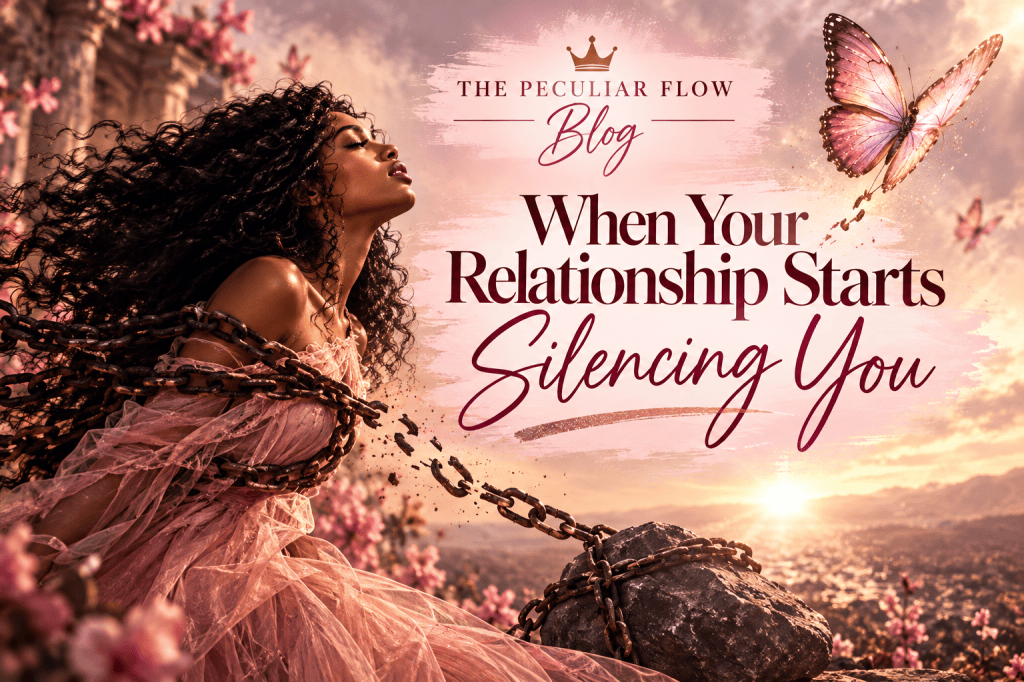
There is a misconception in Christian culture that I think has done more damage than we realize: when people talk about a “Jezebel spirit,” they almost always picture a woman.
A seductive woman.
A loud woman.
A controlling woman.
A woman who is “out of order.”
But when you actually look at Jezebel in Scripture, the larger pattern is not simply femininity, seduction, or a woman being strong-willed.
It is control. Manipulation. Intimidation. Opposition to truth. The misuse of influence. And an attempt to silence what threatens its authority.
And those patterns are not limited to women.
That matters.
Because there are women sitting inside relationships wondering why every time they begin to grow spiritually, something in the relationship begins to push back.
Not always dramatically.
Sometimes it is incredibly subtle.
You start praying more.
You begin discovering who you are.
You become more confident.
You start healing.
You become disciplined.
You stop shrinking.
You start speaking differently.
You develop vision.
You begin believing that God may actually have called you to something.
And suddenly there is tension.
Maybe nobody outright tells you, “Stop growing.”
That would be too obvious.
Instead, your excitement gets met with silence.
Your ideas are subtly mocked.
Your confidence is chipped away at through jokes.
Your spiritual hunger becomes “too much.”
Your boundaries become an attitude problem.
Your obedience becomes inconvenient.
Your calling becomes something you need to “calm down” about.
Your transformation somehow becomes a threat.
And slowly, almost methodically, you start questioning yourself.
That is the part I think we miss.
Something does not have to scream at you to silence you.
Sometimes all it has to do is make you uncomfortable enough with becoming who God called you to be that you begin shrinking yourself voluntarily.
So What Was Jezebel Actually About?
Jezebel was a queen married to King Ahab in the Old Testament, primarily appearing in 1 and 2 Kings.
Her story involved far more than the caricature Christianity sometimes reduces her to.
Jezebel promoted the worship of Baal, opposed the prophets of God, threatened Elijah after the victory at Mount Carmel, and used her position and influence to orchestrate the death of Naboth when her husband wanted his vineyard.
That last story is especially revealing.
Ahab wanted something.
Naboth would not compromise.
Ahab went home upset.
Jezebel stepped in, manipulated the system, arranged false accusations against Naboth, and ultimately had him killed so Ahab could possess what he wanted.
That is not merely seduction.
That is power operating through manipulation, intimidation, deception and control.
Later, in Revelation 2, the name “Jezebel” is used symbolically for a woman influencing believers toward idolatry and sexual immorality.
So when Christians today use the phrase “Jezebel spirit,” they are usually referring to patterns they associate with those biblical accounts.
But we have to be careful.
The Bible never teaches us to casually label every difficult person, dominant personality, unfaithful spouse or unhealthy relationship a “Jezebel.”
And it certainly never says Jezebel-like behavior can only come through women.
If the pattern is control, manipulation, intimidation, deception and opposition to what God is doing, then we should be examining the fruit, not obsessing over the gender.
And Then There Is Being Unequally Yoked
“Unequally yoked” comes from 2 Corinthians 6:14:
“Do not be unequally yoked together with unbelievers.”
A yoke was a wooden beam used to join two animals so they could pull together.
The picture is simple.
Two lives connected closely enough that where one goes affects the other.
If one is pulling north while the other is constantly pulling south, movement becomes exhausting.
And this is where relationships can become complicated.
Being unequally yoked is bigger than, “I go to church and he doesn’t.”
Two people can both say they believe in God and still be moving in radically different directions spiritually.
One person may be pursuing healing while the other protects dysfunction.
One may desire truth while the other survives through avoidance.
One may be learning accountability while the other refuses correction.
One may be discovering purpose while the other resents the changes that purpose requires.
One may be trying to surrender while the other is committed to maintaining control.
That mismatch can become exhausting.
You are trying to move forward while constantly dragging the emotional weight of somebody who is uncomfortable with your movement.
And eventually you may begin thinking the solution is to stop moving.
That is where the danger is.
Some Women Aren’t Rebellious. They’re Disappearing.
Christian women are frequently taught about submission.
We hear about being patient.
Being gracious.
Being forgiving.
Keeping the peace.
Praying for our husbands.
Honoring marriage.
And those things have biblical foundations.
But somewhere along the way, some women learned to confuse submission with disappearance.
You do not have to erase your personality to honor God.
You do not have to abandon your calling to prove you love someone.
You do not have to become spiritually smaller so your growth does not make somebody else uncomfortable.
And you certainly do not have to call manipulation “leadership.”
There is a difference between conviction and control.
There is a difference between correction and humiliation.
There is a difference between sacrifice and erasure.
There is a difference between biblical submission and slowly losing the confidence God has been rebuilding in you.
Sometimes the attack on your confidence is not loud.
It is death by a thousand tiny cuts.
A look.
A joke.
A dismissive response.
Constant skepticism.
Withholding encouragement.
Making you feel ridiculous every time you dream.
Making your spiritual experiences seem foolish.
Creating tension whenever you become independent.
Turning your growth into an accusation against them.
Until eventually you stop sharing.
Then you stop trying.
Then you stop believing yourself.
And eventually the person everyone remembers you being feels foreign even to you.
Pay Attention to What Happens When You Grow
This is one of the questions I believe women should ask themselves inside relationships:
What happens when I become healthier?
Not just happier.
Healthier.
What happens when you establish boundaries?
What happens when you stop participating in dysfunction?
What happens when you become financially responsible?
What happens when your prayer life deepens?
What happens when your confidence returns?
What happens when you discover your gifts?
What happens when you say no?
What happens when God starts healing the parts of you that were once easy to control?
Healthy love may have growing pains.
Two people evolving will absolutely have uncomfortable conversations.
But healthy love ultimately makes room for truth, accountability and growth.
Control requires the opposite.
Control needs predictability.
Control needs you doubting yourself.
Control benefits when you are afraid of conflict.
Control works beautifully when you believe keeping someone comfortable is more important than becoming whole.
And that is why spiritual growth can expose relational dynamics that were much easier to ignore before.
You didn’t necessarily become “difficult.”
You became harder to diminish.
Discernment Without Demonizing People
There is another side of this conversation that matters deeply.
We should be very careful about turning spiritual language into weapons against people.
Not every disagreement is warfare.
Not every unsupportive partner has a demon.
Not every personality clash is evidence of a Jezebel spirit.
And somebody being uncomfortable with your growth does not automatically make them evil.
Sometimes people are insecure.
Sometimes they are wounded.
Sometimes they are afraid of change.
Sometimes they have unhealthy patterns they learned long before they met you.
Sometimes two people simply are not growing in the same direction.
Discernment should produce clarity, not paranoia.
Jesus taught us to look at fruit.
So look at the fruit.
Does this relationship consistently produce fear?
Confusion?
Self-doubt?
Isolation?
Control?
Dishonesty?
Suppression?
Or does it increasingly make room for truth, freedom, accountability, love, peace and growth?
Fruit tells stories labels cannot.
You Are Allowed to Become
Maybe this is the sentence somebody needs:
You are allowed to become the woman God is calling you to be, even when your becoming disrupts the version of you somebody else benefited from.
Read that again.
Because sometimes the resistance isn’t really about your prayer life.
Or your business.
Or your boundaries.
Or your confidence.
It is about the fact that the old version of you was easier to manage.
She questioned herself more.
She tolerated more.
She needed more permission.
She didn’t speak up.
She didn’t know what she carried.
She had not yet realized that peace and silence are not always the same thing.
But once God begins restoring identity, you start recognizing the difference.
And becoming can be disruptive.
Growth will expose what was compatible with your brokenness but incompatible with your healing.
That does not mean you immediately condemn everyone who struggles with the new version of you.
But it does mean you stop automatically assuming your growth is the problem.
Sometimes you are not “doing too much.”
Sometimes you are simply no longer willing to be reduced.
And whatever language we choose to use — spiritual opposition, unhealthy control, manipulation, an unequal yoke, or patterns reminiscent of Jezebel — one truth remains:
Anything that consistently requires you to abandon who God is forming you into deserves your attention.
Not fear.
Not impulsivity.
Attention.
Prayer.
Wisdom.
Counsel.
Discernment.
And truth.
Because love should never require you to disappear in order for the relationship to survive.



Leave a Reply